“So he shepherded them according to the integrity of his heart, and guided them by the skillfulness of his hands.” – (Psalm 78:72)
I cared about the cows.
Some of my earliest childhood years were spent in Germany, in an old house on an Army base where my dad commanded a battalion of soldiers. Our house was tucked up against woods and walking trails, ripe with beauty and golden quiet for hours of family walks. My mom still speaks of those European years with a tint of wonder in her voice, a yearning for days long ago, beautiful and rose-tinted and immeasurably precious.
In those early years, my rambunctious, rosy-cheeked brothers and I learned a whole host of Bible verses, a foundation that has since served us well. A favorite was John 10:11: “I am the good shepherd. The good shepherd gives His life for the sheep.” I always added, in the thick lisp I had for much of my childhood, “And the kuhlimoos!”
“Kuh” is the German word for cow, and “Kuhlimoos” was our childhood name for the cows, handed down from our Austrian Oma’s family. Either I just loved saying the word, or I wanted the poor cows to be included with the sheep. It wouldn’t have been fair for them to be left out in the cold, after all, away from the shepherd’s loving care.
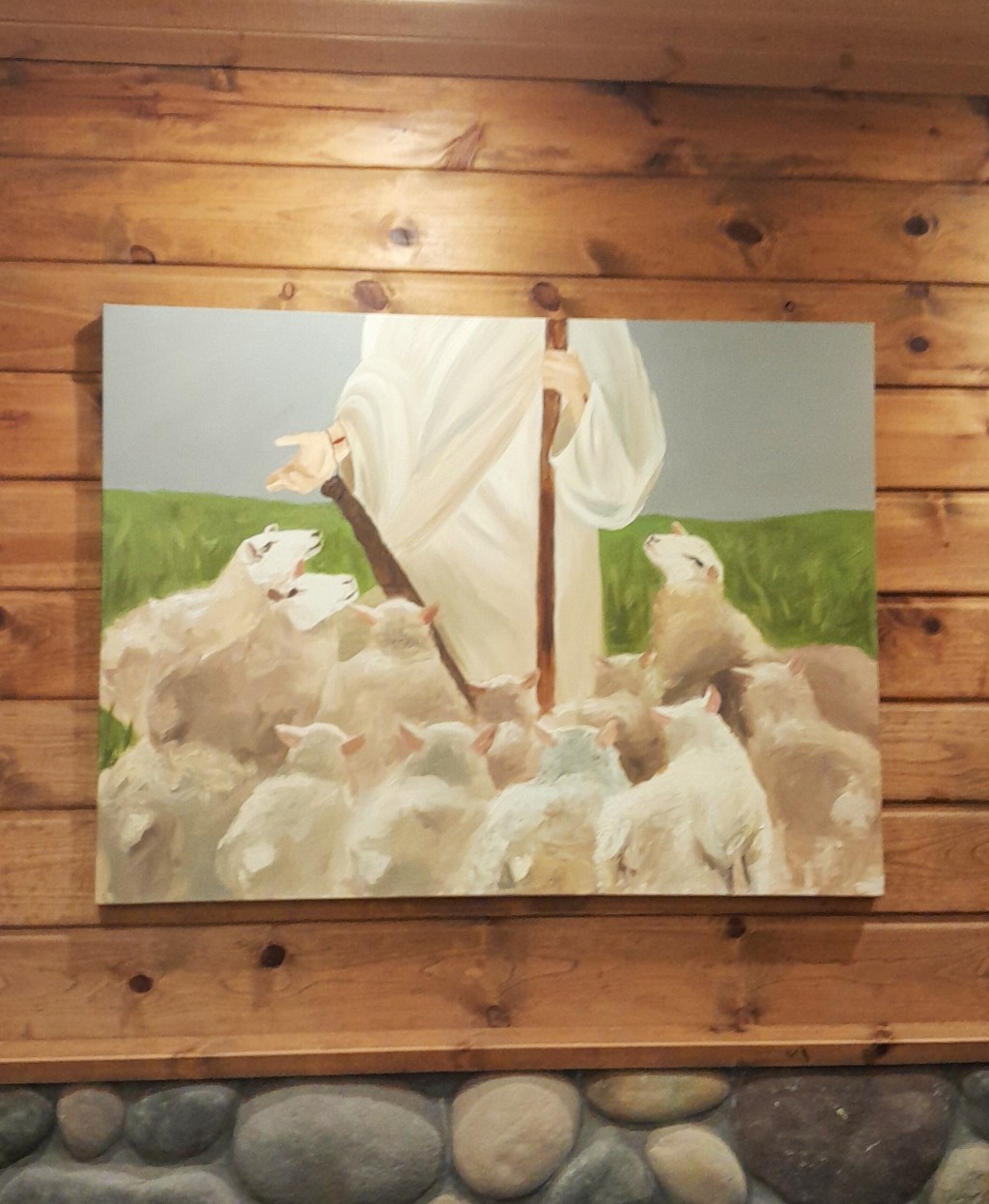
Psalm 78:72 is a verse I have been musing upon often in recent days. Speaking of David, the sweet psalmist of Israel, it says, “So he shepherded them according to the integrity of his heart, and guided them by the skillfulness of his hands.” I’ve always thought it strikingly beautiful that the man after God’s own heart was both shepherd and king, when our Lord is both King of kings and the Good Shepherd. God loved David, with all of his flaws and brokenness, in the same way that He loves us, His stubborn and often dim-witted sheep.
As a young girl, I heard with horror the custom of how a shepherd would break a truant lamb’s legs to keep it close to Him. It seemed to me then, in my idealistic, innocent picture of the world, an unnecessarily cruel thing to do. In my heart, I doubted the shepherd. Could He really be that good, if He was willing to hurt the little ones who trusted Him? I decided that maybe I didn’t love the idea of Jesus as a shepherd, after all.
Years passed, and trials, small and great, came into my life like breakers crashing relentlessly on a shore, and I read anew with weary eyes the achingly beautiful words of Psalm 23, words I had known since childhood, dulled by their very familiarity. Our Lord and Shepherd leads us through death itself and into life beyond. He walks before us, with unerring steps, through the valley’s darkness, for He has trod that lonely path before, alone. He dares cliffs and danger that no one else would risk to save us from our own folly. He makes us lie down for the life-giving rest that we otherwise would never stop to take.
I realized I liked the idea of a shepherd, after all. I saw in the hard moments of my own life, when ideals just weren’t enough, how much I needed the tough love of a Shepherd. As I clung to God in moments of hardship, I would have been perfectly content to endure brokenness if it meant being all the closer to Him. It is as He carries us in our brokenness, I realized, that He knits our souls with His, that He draws us with cords of lovingkindness, that He teaches us to hear His voice so clearly that the cacophony of the world fades away. I wouldn’t trade those moments with the Shepherd for anything.
The end of the story of the little lambs, an ending that I should have listened to more closely, made everything right. In the end, the lambs whose legs were broken would never leave the Shepherd’s side again, even once their healing was complete. They had found that nothing else satisfied; that He was all they could ever need. He is truly that good.
And He loves the cows, too, for He says, “Every beast of the forest is Mine, and the cattle on a thousand hills.” (Psalm 50:10).
Three-year-old me would be delighted.
Savior, like a shepherd lead us,
Much we need Thy tender care
In Thy pleasant pastures feed us,
For our use Thy folds prepare

 Of Words and Wonder
Leave a comment